Buy rock-guide.com ?
We are moving the project
rock-guide.com .
Are you interested in purchasing the domain
rock-guide.com ?
domain@kv-gmbh.de · 0541-91531010
Buy rock-guide.com ?
What are microorganisms?
Microorganisms are tiny living organisms that are too small to be seen with the naked eye. They include bacteria, viruses, fungi, and protists. Microorganisms can be found in almost every environment on Earth, including soil, water, and the human body. While some microorganisms can cause disease, many are beneficial and play important roles in processes such as decomposition, nutrient cycling, and food production. **
How do microorganisms reproduce?
Microorganisms reproduce through a process called binary fission, where a single cell divides into two identical daughter cells. This process allows microorganisms to rapidly increase in number. Some microorganisms, like bacteria, can also reproduce through conjugation, where genetic material is exchanged between two cells. Overall, microorganisms have various methods of reproduction that allow them to adapt and thrive in different environments. **

Similar search terms for Microorganisms
Top-Angebote
Products related to Microorganisms:
-
Fender Precision Bass Black 1978 Vintage Electric Bass Guitar Vintage Black - RefurbishedThis is a Fender Precision Bass in Black finish. The Fender Precision bass was launched in 1951, and despite how ubiquitous it is today, actually took a few years to catch on. Electric bass guitars were a new concept at the time, and Leo Fender had to travel to jazz clubs & concert halls to promote his new instrument face to face with musicians. Several design modifications were made throughout the '50s before a major revision in '57. The headstock was changed to resemble the Stratocaster rather than the Telecaster it had originally, and the pickguard was also changed to echo the design of the Strat. The iconic split single-coil pickup was added and the bridge was changed to a top-loading design with four steel saddles. Aside from offering Rosewood fingerboard & different pickup options in the following years, the P Bass' design has remained largely unchanged since 1957, and has gone down in history as the first commercially successful bass guitar design, with an immeasurable impact in the world of music. Made in the USA in 1978, this bass comes from the height of Fender's CBS era. Whilst CBS made several small design tweaks to Fender's instruments, the P Bass remained largely unchanged save for the use of a polyurethane finish. It is clear that this particular example has stood the test of time, and has been well played & enjoyed throughout its 47 year life. Naturally, a bolt-on construction is employed and comprises an Alder body, Maple neck and 20 fret Maple fingerboard. Chrome hardware is fitted including a top-loading bridge & split-post open-geared tuning machines. A split single-coil pickup is installed and wired to master volume & tone controls. The Maple neck plays very well, with a profile which might be described as a smooth and even 'C' shape, perhaps slightly thicker than you might find on Fender's modern offerings. Paired with the 7.25" fingerboard radius, this bass has a genuinely vintage specification. Along with the finish wear from the years of playing this bass has seen, the instrument feels very inspiring in the hands. Certainly, this bass has a 'mojo' to it which is often imitated on modern instruments but never equalled. Deep, rumbling lows will fill out your mix, whilst punchy mids and a sparkly top end will ensure that you have plenty of snap and attack to provide a lively and percussive performance. pushing your bass playing forward in the mix to create more urgency in the sound. The controls keep things simple; not intruding on the playing experience but still offering ample opportunities for tone shaping. Rolling the tone control down darkens the sound nicely, allowing you to blend more easily into the mix for a more mellow, quite jazzy tone. A well-loved bass that has worked hard throughout it's life but still has plenty to give.1890,00 £*Shipping: 0,00 £Secure redirect to the provider
-
Squier Affinity Series Precision Bass PJ Pack with Rumble 15 Amplifier Original - RefurbishedIdeal für Erstspieler, enthält das Squier Affinity PJ Bass Pack einen Affinity Series Precision Bass mit einem leistungsstarken Split-Coil P Bass Middle Pickup und einem knurrenden J Bass® Single-Coil Bridge Pickup. Ein hervorragendes Tor in die altehrwürdige Fender®-Familie, bietet die Squier® Affinity SeriesTM Precision Bass® PJ legendäres Design und einen typischen Ton für den aufstrebenden Bassist von heute. Dieser P Bass® verfügt über mehrere spielerfreundliche Verfeinerungen wie einen dünnen und leichten Körper, ein schlankes und komfortables "C" -förmiges Halsprofil und Vintage-Open-Gear-Tuning-Maschinen für eine glatte, genaue Abstimmung. Mit einem Squier Split Single-Coil P Bass Hals Pickup und einem Single-Coil J Bass® Bridge Pickup für eine Vielzahl von Tönen ist dieses Modell bereit, die Grundlage für jeden Spieler in jeder Phase zu legen. TONALE VERSATILITÄT Ausgestattet mit P Bass und J Bass Pickups bietet dieser Bass viel tonale Vielseitigkeit. Der Split-Single-Coil-P-Bass-Pickup bietet einen druckvollen, seismischen Ton, während der Single-Coil-J-Bass-Pickup einen klassischen Ton mit berühmtem gutturalen Mittelton und singendem High-End liefert. FENDER RUMME 15 AMP Perfekt für Übungseinheiten und Jamming, der Fender Rumble 15 Bassverstärker pumpt 15 Watt reinen Fender Basston.344,52 £*Shipping: 0,00 £Secure redirect to the provider
-
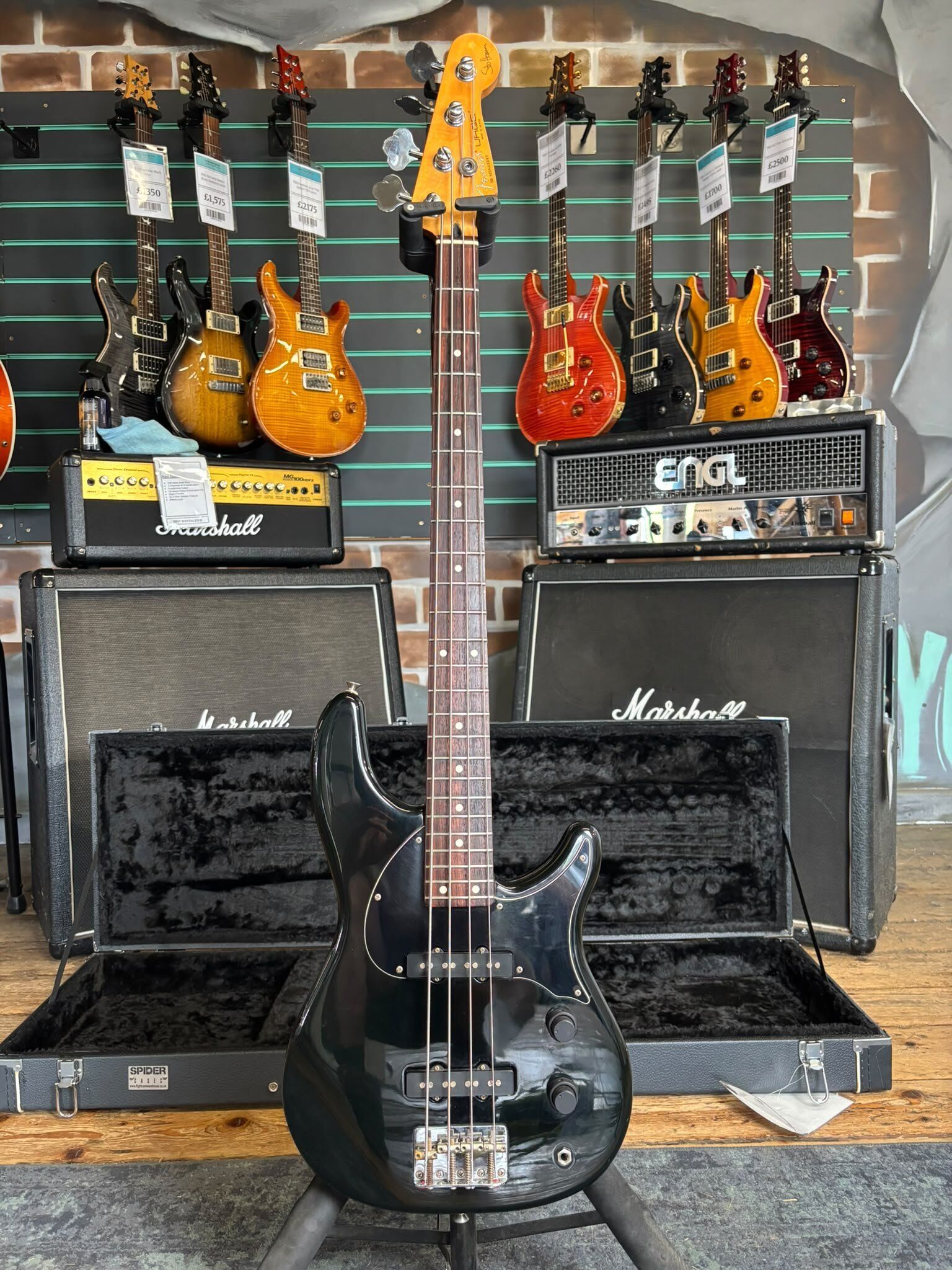
Fender Urge Stu Hamm black electric bass guitar black - RefurbishedThis is a Fender Urge Stu Hamm signature electric bass guitar in Black. Composed of a Poplar body, Bolt-on Maple neck and 24 fret Rosewood fingerboard. Other appointments include 4-Saddle bridge and Vintage Style tuning machines. A pair of Fender single-coil bass pickups are fitted and wired to stacked controls for volume and tone. The Maple neck plays very well, with the profile filling the hand nicely for a substantial yet articulate grip across the register. The 1.6" nut width is nice and traditional, offering ample string spacing for accurate fretting. The Rosewood fingerboard is pleasant under the fingers, and paired with the Medium Jumbo frets, there's a rock solid sensation under the fingers whilst enhancing the feel of vibrato and string bending techniques. The Fender single-coil pickups deliver classic original-era tone and power, with smooth rounded lows, clear and open mid range and a sweet treble response that captures the attack and aggression of your playing. The stacked control layout offers comprehensive control of your sound without over complicating things or getting in the way of the playing experience. Luthier Report Our ID: 1020726221000 Weight: 7.15lbs Serial: MSN44041 Aesthetic Condition: Headstock: Overall very good condition. The front and rear face edges demonstrate light scratching and indentation throughout. A notable indentation is apparent to the treble side of the cutaway, that has marked but not removed any of the finish. A small star and circular sticker residue are apparent to the front and rear face respectively. Neck: Overall very good condition. The rear of the neck demonstrates light indentations that cannot be felt by the hand in playing position, most notably in line with the 2nd and 5th frets. Any markings to the fingerboard are difficult to discern. Body: Overall good condition. All aspects of the body demonstrate light scratching, only visible under direct light at certain angles, with wear and hazing of the finish. The front face demonstrates wear to the finish to the treble side of the G string. The tip of the treble side horn demonstrates liquid staining, only visible under direct light, that could not be removed during our cleaning process. Consistent indentation is apparent to the sides, most notably at the bass and treble sides of the lower bout, where the finish has been pierced but not removed, not exposing the wood beneath. Condition of Frets: The frets demonstrate light signs of use, not affecting playability. There is considerable material remaining for any fret work the new owner may wish to perform. Current Set Up: Truss Rod: Fully functional. Truss rod tool (5mm) not included. Hardware: Fully functional and good condition. Light scratching and tarnishing is apparent to the tuners and bridge. Notable oxidisation is apparent to the bridge saddles and intonation screws. Notably scratching can be seen to the scratch plate. Structural: No concerns or issues to note. Height of the string from the...910,00 £*Shipping: 0,00 £Secure redirect to the provider
-
Trent Austin Design Multi Guitar Floor Stand, Adjustable Guitar Rack for Acoustic, Electric Guitar & Bass, Rustic Brown Black;Brown 28"This guitar stand measures 38 x 30 x 118 cm (L x W x H) and can hold up to 5 instruments up to 110 cm in height. The top shelf offers convenient storage for guitar accessories including straps, strings, tuners, capos, and maintenance kits. Compatible with most string instruments such as acoustic guitars, electric guitars, bass guitars, banjos, mandolins, and ukuleles, ideal for displaying your instrument collection in style.. Made of high-quality engineered wood with a sturdy frame for stable support. Metal holders are lined with soft EVA padding to protect guitar necks and surfaces from scratches and damage.. Suitable for music rooms, home studios, living areas, and display corners. Also a great gift choice for music lovers for Christmas, Valentine’s Day, Thanksgiving, and other holidays.. Brand Name: Trent Austin Design.112,99 £*Shipping: 0,00 £Secure redirect to the provider



-
Can microorganisms pass through materials?
Yes, microorganisms can pass through materials depending on their size and the porosity of the material. Some microorganisms are small enough to pass through tiny openings in materials like fabrics, filters, or even some types of plastics. This is why it is important to use materials that are specifically designed to block the passage of microorganisms in certain applications, such as in medical settings or food processing. **
-
Do microorganisms die in acid?
Yes, many microorganisms can die in acidic conditions. Acidic environments can disrupt the cell membranes and denature the proteins of microorganisms, leading to their death. However, some microorganisms, suchjson as acidophilic bacteria, are able to survive and even thrive in acidic conditions. These acidophilic microorganisms have evolved mechanisms to maintain their internal pH and protect their cellular structures from the damaging effects of acidity. **
-
What are the smallest microorganisms?
The smallest microorganisms are bacteria and archaea. These single-celled organisms are so tiny that they can only be seen under a microscope. Some bacteria and archaea are as small as 0.2 micrometers in diameter, making them the smallest known living organisms. Despite their small size, bacteria and archaea play crucial roles in various ecosystems and are essential for many biochemical processes. **
-
Why do microorganisms spoil food?
Microorganisms spoil food because they use the nutrients in the food as a source of energy and growth. Bacteria, molds, and yeasts are the main culprits of food spoilage, and they thrive in the right conditions of moisture, warmth, and pH levels. As they grow and reproduce, they produce enzymes and waste products that break down the food's proteins, fats, and carbohydrates, leading to changes in texture, color, flavor, and odor. This ultimately makes the food unpalatable and unsafe to eat. **

What do microorganisms need to reproduce?
Microorganisms need a suitable environment with the right temperature, pH level, and nutrients to reproduce. They also require moisture and oxygen to carry out their metabolic processes and grow. Additionally, some microorganisms may need specific conditions such as light or darkness to reproduce successfully. Overall, providing the necessary environmental conditions is crucial for the reproduction of microorganisms. **
What types of microorganisms could arise?
Various types of microorganisms could arise, including bacteria, viruses, fungi, and protists. These microorganisms could be pathogenic, causing diseases in humans, animals, or plants, or they could be beneficial, such as those involved in nutrient cycling, decomposition, or symbiotic relationships. The specific types of microorganisms that arise would depend on the environmental conditions, available resources, and interactions with other organisms. Additionally, genetic mutations and horizontal gene transfer could contribute to the emergence of new microorganism variants. **
Top-Angebote
Products related to Microorganisms:
-
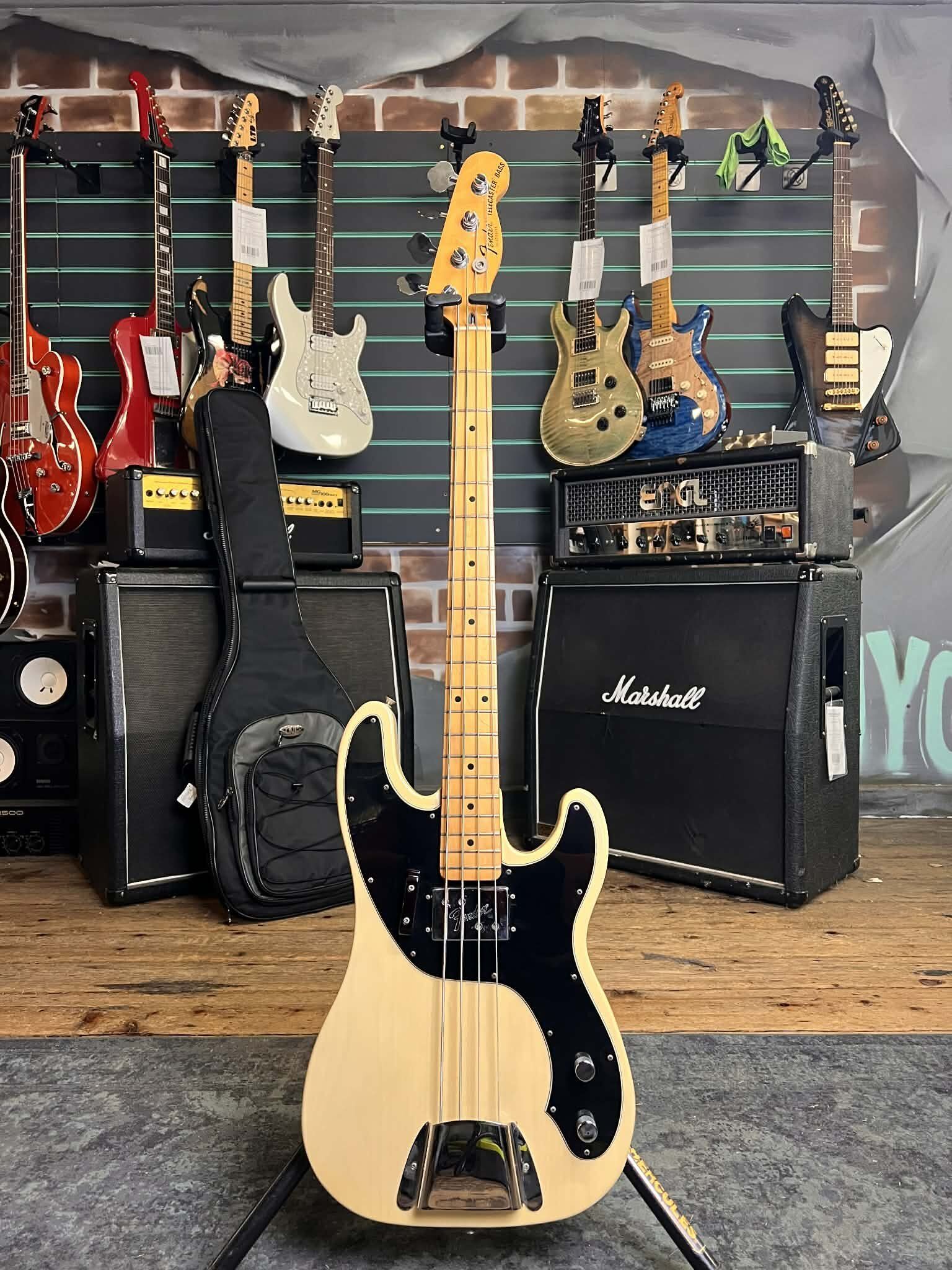
Fender Telecaster Bass Blonde 1977 Vintage Electric Bass Guitar Vintage Blonde - RefurbishedThis is a Fender Telecaster Bass in Blonde finish. Made in the USA in 1977, this bass comes from the second run of Telecaster Basses which were available from '71 up to their discontinuation in 1979. The original version was introduced in 1968, and was largely a reissue of the original Precision Bass, featuring Telecaster inspired features such as the small headstock, solitary single-coil pickup and separate control plate. In 1971 the design was updated to include some of the well-known CBS era appointments including the bullet truss rod nut and 3-bolt micro-tilt neck plate. Additionally the pickguard was re-designed to incorporate the controls and Fender's new Seth Lover-designed Wide Range pickup. The model was discontinued in '79, but has enjoyed several subsequent reissues as part of the Squier Vintage Modified series & Fender's Vintera II lineup. Naturally, a bolt-on construction is employed, and comprises an Ash body, Maple neck and 20 fret Maple fingerboard. Chrome hardware is fitted including a top-loading 4-saddle bridge with cover and Fender open-geared tuning machines. A Fender Wide Range Bass humbucking pickup is installed on the 3-ply black/white/black pickguard, and is wired to master volume & tone controls. The Maple neck plays very comfortably, with what might be described as a ‘U’ profile. This fillsthe hand reassuringly whilst still allowing for comfortable reach in all registers and promoting ergonomic thumb positioning. The double cutaway body design offers extended access into the upper register which works well with the gloss finish to the rear of the neck, allowing for smooth navigation of the 34” scale. The frets are on the larger size, feeling similar to modern medium jumbos. These feel great under the fingers, and provide the versatility required for a wide range of playing styles and techniques. The Wide Range Bass humbucker installed in this guitar had only been introduced in 1971, so the Telecaster bass was one of the first instruments to feature the pickup as factory standard. The Wide Range Bass humbucker makes use of 4 magnetised pole pieces rather than the bar magnet and screw arrangement of the Gibson PAF. Due to the difficulty of machining AlNiCo (Aluminium/Nickel/Cobalt) into threaded rod magnets, Fender chose to use CuNiFe magnets (Copper/Nickel/Iron) instead. As they produce less output than AlNiCo magnets, more windings were needed to produce enough output- resulting in a much larger enclosure than a typical humbucker. The tone is full-bodied and warm, filling out the bottom of the mix very nicely whilst still capturing all the snap and attack of your playing. A seriously cool instrument in astonishing condition. This is because between ‘77 and ‘78 Fender switched from using a string-thru bridge, to a top loading bridge. This means the body of the bass does not have holes and ferrules for a string-thru bridge. Please see the pictures of the body and neck attached to the listing. Luthier Report Our ID:...2470,00 £*Shipping: 0,00 £Secure redirect to the provider
-
Fender Precision Bass Black 1978 Vintage Electric Bass Guitar Vintage Black - RefurbishedThis is a Fender Precision Bass in Black finish. The Fender Precision bass was launched in 1951, and despite how ubiquitous it is today, actually took a few years to catch on. Electric bass guitars were a new concept at the time, and Leo Fender had to travel to jazz clubs & concert halls to promote his new instrument face to face with musicians. Several design modifications were made throughout the '50s before a major revision in '57. The headstock was changed to resemble the Stratocaster rather than the Telecaster it had originally, and the pickguard was also changed to echo the design of the Strat. The iconic split single-coil pickup was added and the bridge was changed to a top-loading design with four steel saddles. Aside from offering Rosewood fingerboard & different pickup options in the following years, the P Bass' design has remained largely unchanged since 1957, and has gone down in history as the first commercially successful bass guitar design, with an immeasurable impact in the world of music. Made in the USA in 1978, this bass comes from the height of Fender's CBS era. Whilst CBS made several small design tweaks to Fender's instruments, the P Bass remained largely unchanged save for the use of a polyurethane finish. It is clear that this particular example has stood the test of time, and has been well played & enjoyed throughout its 47 year life. Naturally, a bolt-on construction is employed and comprises an Alder body, Maple neck and 20 fret Maple fingerboard. Chrome hardware is fitted including a top-loading bridge & split-post open-geared tuning machines. A split single-coil pickup is installed and wired to master volume & tone controls. The Maple neck plays very well, with a profile which might be described as a smooth and even 'C' shape, perhaps slightly thicker than you might find on Fender's modern offerings. Paired with the 7.25" fingerboard radius, this bass has a genuinely vintage specification. Along with the finish wear from the years of playing this bass has seen, the instrument feels very inspiring in the hands. Certainly, this bass has a 'mojo' to it which is often imitated on modern instruments but never equalled. Deep, rumbling lows will fill out your mix, whilst punchy mids and a sparkly top end will ensure that you have plenty of snap and attack to provide a lively and percussive performance. pushing your bass playing forward in the mix to create more urgency in the sound. The controls keep things simple; not intruding on the playing experience but still offering ample opportunities for tone shaping. Rolling the tone control down darkens the sound nicely, allowing you to blend more easily into the mix for a more mellow, quite jazzy tone. A well-loved bass that has worked hard throughout it's life but still has plenty to give.1890,00 £*Shipping: 0,00 £Secure redirect to the provider
-
Squier Affinity Series Precision Bass PJ Pack with Rumble 15 Amplifier Original - RefurbishedIdeal für Erstspieler, enthält das Squier Affinity PJ Bass Pack einen Affinity Series Precision Bass mit einem leistungsstarken Split-Coil P Bass Middle Pickup und einem knurrenden J Bass® Single-Coil Bridge Pickup. Ein hervorragendes Tor in die altehrwürdige Fender®-Familie, bietet die Squier® Affinity SeriesTM Precision Bass® PJ legendäres Design und einen typischen Ton für den aufstrebenden Bassist von heute. Dieser P Bass® verfügt über mehrere spielerfreundliche Verfeinerungen wie einen dünnen und leichten Körper, ein schlankes und komfortables "C" -förmiges Halsprofil und Vintage-Open-Gear-Tuning-Maschinen für eine glatte, genaue Abstimmung. Mit einem Squier Split Single-Coil P Bass Hals Pickup und einem Single-Coil J Bass® Bridge Pickup für eine Vielzahl von Tönen ist dieses Modell bereit, die Grundlage für jeden Spieler in jeder Phase zu legen. TONALE VERSATILITÄT Ausgestattet mit P Bass und J Bass Pickups bietet dieser Bass viel tonale Vielseitigkeit. Der Split-Single-Coil-P-Bass-Pickup bietet einen druckvollen, seismischen Ton, während der Single-Coil-J-Bass-Pickup einen klassischen Ton mit berühmtem gutturalen Mittelton und singendem High-End liefert. FENDER RUMME 15 AMP Perfekt für Übungseinheiten und Jamming, der Fender Rumble 15 Bassverstärker pumpt 15 Watt reinen Fender Basston.344,52 £*Shipping: 0,00 £Secure redirect to the provider
-
What are microorganisms?
Microorganisms are tiny living organisms that are too small to be seen with the naked eye. They include bacteria, viruses, fungi, and protists. Microorganisms can be found in almost every environment on Earth, including soil, water, and the human body. While some microorganisms can cause disease, many are beneficial and play important roles in processes such as decomposition, nutrient cycling, and food production. **
-
How do microorganisms reproduce?
Microorganisms reproduce through a process called binary fission, where a single cell divides into two identical daughter cells. This process allows microorganisms to rapidly increase in number. Some microorganisms, like bacteria, can also reproduce through conjugation, where genetic material is exchanged between two cells. Overall, microorganisms have various methods of reproduction that allow them to adapt and thrive in different environments. **
-
Can microorganisms pass through materials?
Yes, microorganisms can pass through materials depending on their size and the porosity of the material. Some microorganisms are small enough to pass through tiny openings in materials like fabrics, filters, or even some types of plastics. This is why it is important to use materials that are specifically designed to block the passage of microorganisms in certain applications, such as in medical settings or food processing. **
-
Do microorganisms die in acid?
Yes, many microorganisms can die in acidic conditions. Acidic environments can disrupt the cell membranes and denature the proteins of microorganisms, leading to their death. However, some microorganisms, suchjson as acidophilic bacteria, are able to survive and even thrive in acidic conditions. These acidophilic microorganisms have evolved mechanisms to maintain their internal pH and protect their cellular structures from the damaging effects of acidity. **
Similar search terms for Microorganisms
-
Fender Urge Stu Hamm black electric bass guitar black - RefurbishedThis is a Fender Urge Stu Hamm signature electric bass guitar in Black. Composed of a Poplar body, Bolt-on Maple neck and 24 fret Rosewood fingerboard. Other appointments include 4-Saddle bridge and Vintage Style tuning machines. A pair of Fender single-coil bass pickups are fitted and wired to stacked controls for volume and tone. The Maple neck plays very well, with the profile filling the hand nicely for a substantial yet articulate grip across the register. The 1.6" nut width is nice and traditional, offering ample string spacing for accurate fretting. The Rosewood fingerboard is pleasant under the fingers, and paired with the Medium Jumbo frets, there's a rock solid sensation under the fingers whilst enhancing the feel of vibrato and string bending techniques. The Fender single-coil pickups deliver classic original-era tone and power, with smooth rounded lows, clear and open mid range and a sweet treble response that captures the attack and aggression of your playing. The stacked control layout offers comprehensive control of your sound without over complicating things or getting in the way of the playing experience. Luthier Report Our ID: 1020726221000 Weight: 7.15lbs Serial: MSN44041 Aesthetic Condition: Headstock: Overall very good condition. The front and rear face edges demonstrate light scratching and indentation throughout. A notable indentation is apparent to the treble side of the cutaway, that has marked but not removed any of the finish. A small star and circular sticker residue are apparent to the front and rear face respectively. Neck: Overall very good condition. The rear of the neck demonstrates light indentations that cannot be felt by the hand in playing position, most notably in line with the 2nd and 5th frets. Any markings to the fingerboard are difficult to discern. Body: Overall good condition. All aspects of the body demonstrate light scratching, only visible under direct light at certain angles, with wear and hazing of the finish. The front face demonstrates wear to the finish to the treble side of the G string. The tip of the treble side horn demonstrates liquid staining, only visible under direct light, that could not be removed during our cleaning process. Consistent indentation is apparent to the sides, most notably at the bass and treble sides of the lower bout, where the finish has been pierced but not removed, not exposing the wood beneath. Condition of Frets: The frets demonstrate light signs of use, not affecting playability. There is considerable material remaining for any fret work the new owner may wish to perform. Current Set Up: Truss Rod: Fully functional. Truss rod tool (5mm) not included. Hardware: Fully functional and good condition. Light scratching and tarnishing is apparent to the tuners and bridge. Notable oxidisation is apparent to the bridge saddles and intonation screws. Notably scratching can be seen to the scratch plate. Structural: No concerns or issues to note. Height of the string from the...910,00 £*Shipping: 0,00 £Secure redirect to the provider
-
Trent Austin Design Multi Guitar Floor Stand, Adjustable Guitar Rack for Acoustic, Electric Guitar & Bass, Rustic Brown Black;Brown 28"This guitar stand measures 38 x 30 x 118 cm (L x W x H) and can hold up to 5 instruments up to 110 cm in height. The top shelf offers convenient storage for guitar accessories including straps, strings, tuners, capos, and maintenance kits. Compatible with most string instruments such as acoustic guitars, electric guitars, bass guitars, banjos, mandolins, and ukuleles, ideal for displaying your instrument collection in style.. Made of high-quality engineered wood with a sturdy frame for stable support. Metal holders are lined with soft EVA padding to protect guitar necks and surfaces from scratches and damage.. Suitable for music rooms, home studios, living areas, and display corners. Also a great gift choice for music lovers for Christmas, Valentine’s Day, Thanksgiving, and other holidays.. Brand Name: Trent Austin Design.112,99 £*Shipping: 0,00 £Secure redirect to the provider
-
Scholastic 100 English Lessons: Planning Guide (100 Lessons - 2014 Curriculum)Master the Curriculum with Scholastic's 100 Lessons. Scholastic's acclaimed 100 Lessons series is here to help your school prepare. Trusted by teachers for 15 years and selling more than one million copies, 100 Lessons is fully in line with the Curriculum objectives. Our new 100 Lessons and Planning Guides will make planning and teaching the new requirements simple and stress-free. Understand the requirements and plan with confidence for all six years Long- and medium-term planning and progression, ideal for subject coordinators Get a clear overview with simple week-by-week breakdowns on how to create units of work Includes a FREE A2 poster that gives an overview of progression and a CD-ROM full of editable planning grids View sample resources at www.scholastic.co.uk/100lessons9,99 £*Shipping: 2,99 £Secure redirect to the provider
-
What are the smallest microorganisms?
The smallest microorganisms are bacteria and archaea. These single-celled organisms are so tiny that they can only be seen under a microscope. Some bacteria and archaea are as small as 0.2 micrometers in diameter, making them the smallest known living organisms. Despite their small size, bacteria and archaea play crucial roles in various ecosystems and are essential for many biochemical processes. **
-
Why do microorganisms spoil food?
Microorganisms spoil food because they use the nutrients in the food as a source of energy and growth. Bacteria, molds, and yeasts are the main culprits of food spoilage, and they thrive in the right conditions of moisture, warmth, and pH levels. As they grow and reproduce, they produce enzymes and waste products that break down the food's proteins, fats, and carbohydrates, leading to changes in texture, color, flavor, and odor. This ultimately makes the food unpalatable and unsafe to eat. **
-
What do microorganisms need to reproduce?
Microorganisms need a suitable environment with the right temperature, pH level, and nutrients to reproduce. They also require moisture and oxygen to carry out their metabolic processes and grow. Additionally, some microorganisms may need specific conditions such as light or darkness to reproduce successfully. Overall, providing the necessary environmental conditions is crucial for the reproduction of microorganisms. **
-
What types of microorganisms could arise?
Various types of microorganisms could arise, including bacteria, viruses, fungi, and protists. These microorganisms could be pathogenic, causing diseases in humans, animals, or plants, or they could be beneficial, such as those involved in nutrient cycling, decomposition, or symbiotic relationships. The specific types of microorganisms that arise would depend on the environmental conditions, available resources, and interactions with other organisms. Additionally, genetic mutations and horizontal gene transfer could contribute to the emergence of new microorganism variants. **
* All prices are inclusive of VAT and, if applicable, plus shipping costs. The offer information is based on the details provided by the respective shop and is updated through automated processes. Real-time updates do not occur, so deviations can occur in individual cases. ** Note: Parts of this content were created by AI.